Key developments
- On 31 January 1968 the Parliamentary Assembly of the Council of Europe adopted Recommendation 509 (1968) on Human rights and modern scientific and technological developments, asking for studying and reporting ‘on the question whether, having regard to Article 8 of the Convention on Human Rights, the national legislation in the member States adequately protects the right to privacy against violations which may be committed by the use of modern scientific and technical methods’.
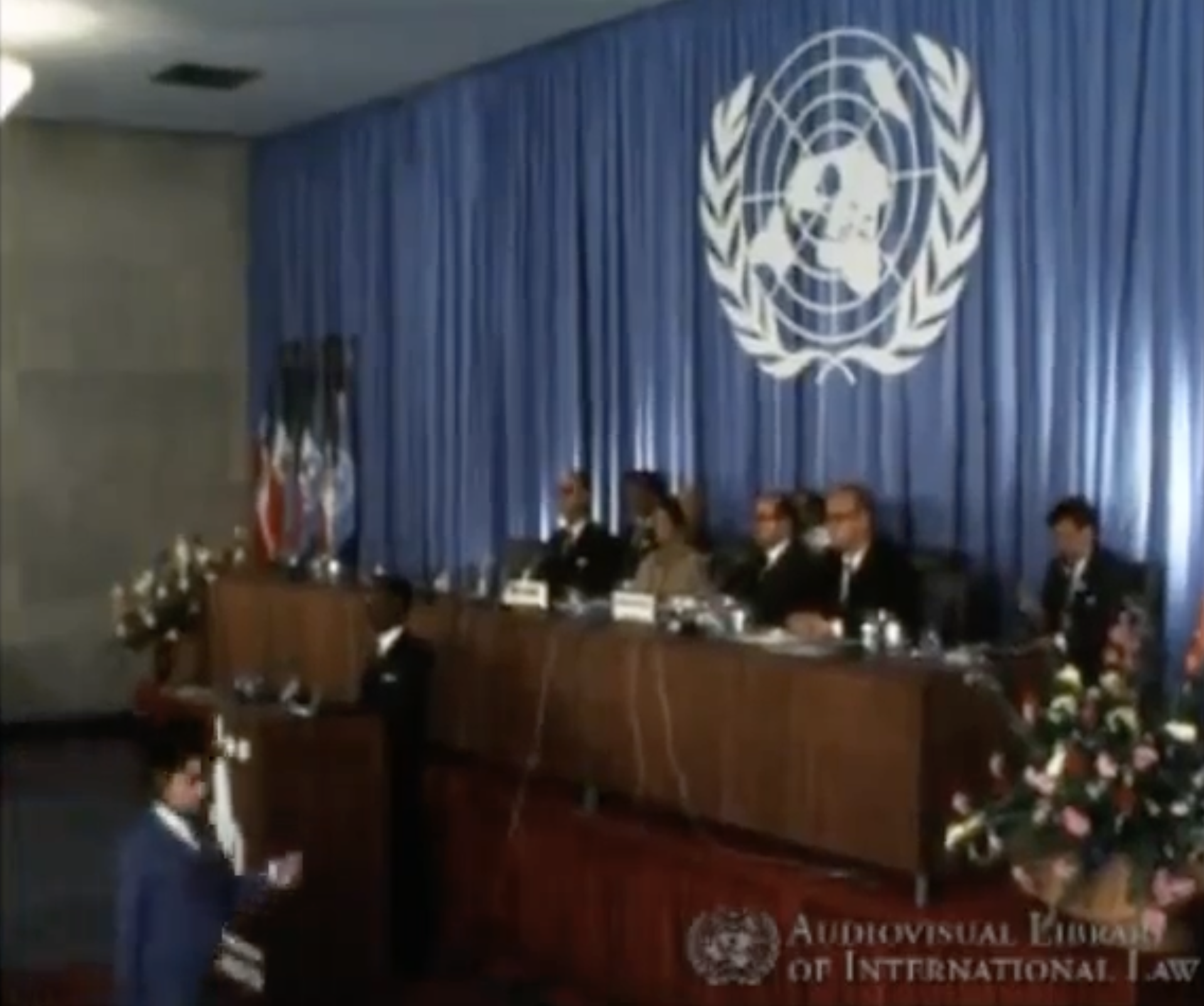
- From 22 April to 13 May 1968 takes place the First International Conference on Human Rights to review progress since the adoption of the Universal Declaration on Human Rights. On 12 May 1968 it adopts a resolution entitled Human Rights and Scientific and Technological Developments, calling inter alia for research on privacy and recording techniques, and the uses of electronics that might affect individual rights. Read about it in: Steven L. B. Jensen, ‘The 1968 United Nations debate on human rights and tech‘, OpenGlobalRights). Watch a video of A. H. W. Williams (Jamaica) on 23 April 1968 referring to need to keep up with technological developments.
- 🇺🇳 On 19 December 1968, the UN General Assembly adopts a Resolution inspired on the Resolution of the International Conference, titled Human Rights and scientific and technological developments.
Also this year


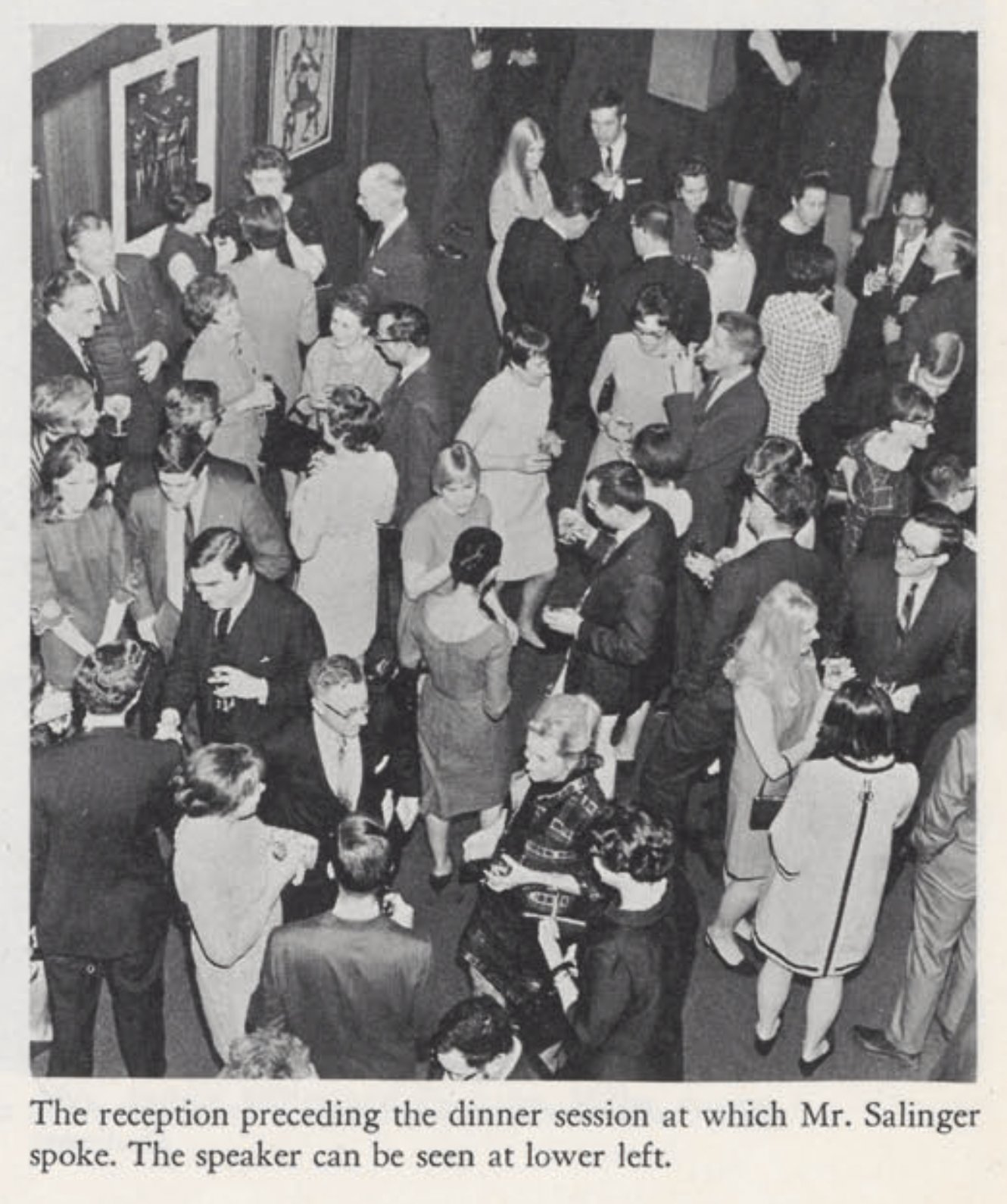
- On 23 February 1968 kicked off at the University of Chicago Law School a Conference titled ‘Privacy: Policy and the Law’. More info and pictures in Law School Record 16 (1).
- At the Organisation for Economic Co-operation and Development (OECD), a Computer Utilisation Group is set up by the OECD Committee for Science Policy in response to recommendations of the 3rd Ministerial Meeting on Science.
Literature
- Armer, Paul (1968), Privacy Aspects of the Cashless and Checkless Society,Testimony Before the Senate Subcommittee on Administrative Practice and Procedure, Rand Corporation.
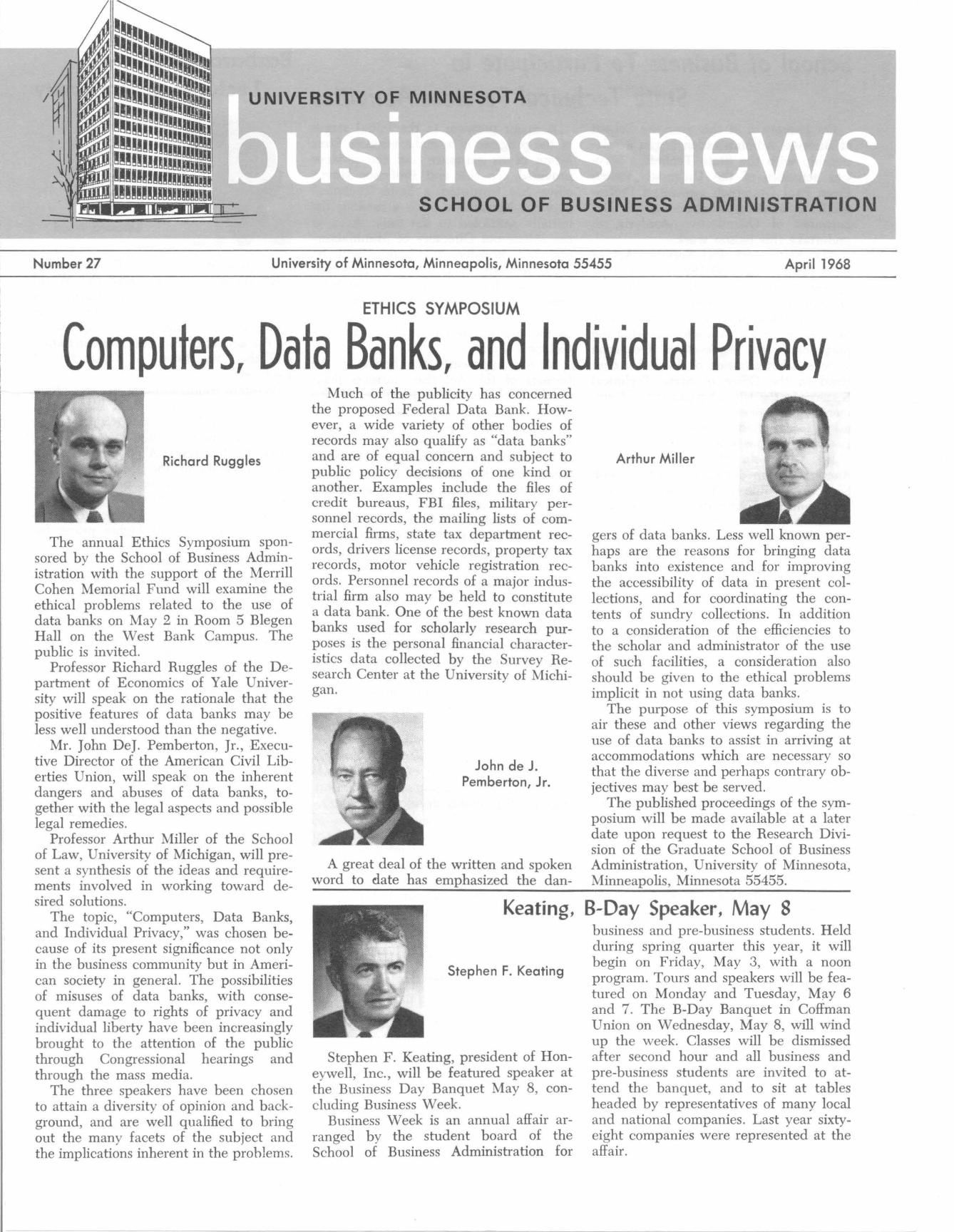
- ‘Ethics Symposium: Computers, Data Banks, and Individual Privacy‘ (1968), Business News of the School of Business Administration of the University of Minnesota‘, 27.
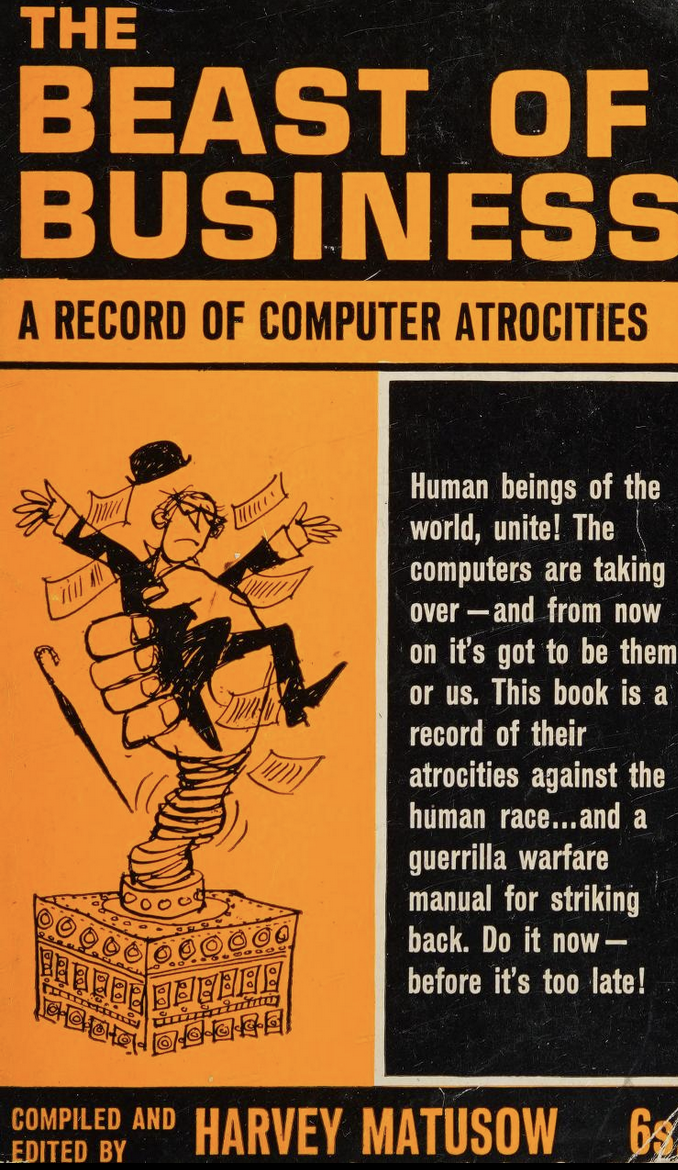
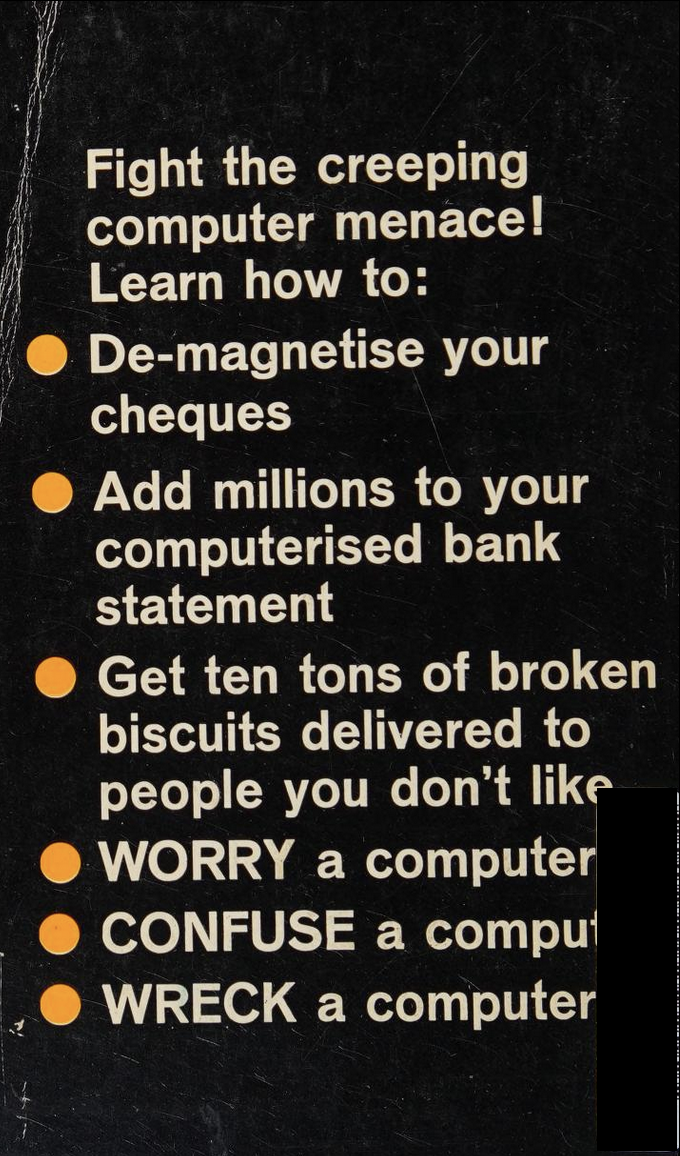
- Matusow, Harvey (1998), The beast of business: A record of computer atrocities, Wolfe Publishing.
- Ruggles, Richard, John de J. Pemberton Jr. and Arthur R. Miller (1968), ‘Computers, Data Banks, and Individual Privacy‘, Minnesota Law Review, 53, 211-245 (symposium transcript).
- ‘Privacy and Efficient Government: Proposals for a National Data Center‘ (1968), Harvard Law Review 82(2), 400–417.
Watch


- 📺 Data for decision (1968), David Millar, available at the National Film Board of Canada.
In the media
- Robertsons, Nan, ‘Data Bank: Peril or Aid?; The U.S. Central Data Bank: Would It Threaten Your Privacy?‘, The New York Times, 7 January 1968, 1.
- Zion, Sidney E. ‘Computer Focus of Privacy Talks; Code Covering Data Banks Asked at Law Conference’, The New York Times, 25 February 1968.
- Reed, Roy, ‘Witness Says Credit Bureaus Invade Privacy and Asks Curb‘, The New York Times, 13 March 1968.
- ‘False Opinion’ About Computers‘, Press, CVIII, 31778, 7 September 1968, 14.
- ‘Snooping Devices Attacked‘, Press, CVIII, 31779, 9 September 1968, 13.
- ‘Right of privacy’, Press, CVIII, 31799, 2 October 1968, 3.
- ‘Challenges Seen In Computer Age‘, Press, CVIII, 31811, 16 October 1968, 16.
 Gloria González Fuster