Resources on early developments in the history of data protection law:
- On 27 April 1819, Pierre-Paul Royer-Collard delivered to the French Chamber of Deputies a speech referring to ‘la vie privée murée‘ (the ‘walled private life’).
- Warren, Samuel D., and Louis D. Brandeis (1890), ‘The Right to Privacy‘, Harvard Law Review, 4(5), 193–220.
- ‘A woman’s beauty is not her own‘, Auckland Star, XXXIII, 269, 12 November 1902, 4.

- On 16 March 1914, the Parisian Henriette Caillaux, fearing that Le Figaro was going to publish private letters showing that her husband had already a relationship with her while he was still married to his first wife, shot and killed the newspaper’s editor.

- On 6 October 1914 died Marion Manola, famously mentioned by Warren and Brandeis in their 1890 article. Manola was a ‘light opera’ singer, who objected to the use of picture of her in her tights surreptitiously taken by two men. She had a fascinating but complicated life.
- ‘The passing of privacy‘, Wairarapa Daily Times, LXVI, 12042, 29 July 1914, 4.
- ‘Automatic system: Question of privacy‘, Manawatu Standard, XLVII, 292, 9 November 1927, 4.
- ‘No privacy: Trunk telephone system‘, Press, LXIII, 19158, 15 November 1927, 12.
- ‘Interference: Very little privacy – Talk by professor’, Auckland Star, LXVIII, 243, 13 October 1937, 12.
- ‘Privacy in Modern Life‘, Evening Post, CXXV, 20, 25 January 1938, 8.
- ‘Little privacy: Nazi rule today‘, Gisborne Herald, LXVI, 20124, 19 December 1939, 7.
- ‘Ants in an Ant-State: A Plea For Privacy‘, Press, LXXVI, 22929, 27 January 1940, 10.
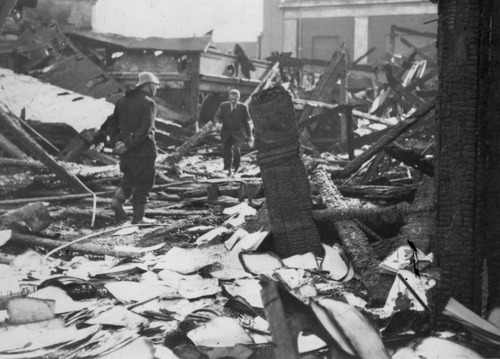
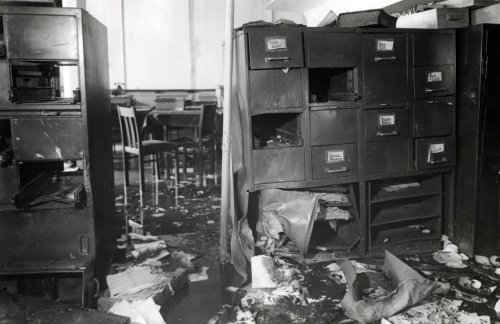
- On 27 March 1943, members of the Dutch Resistance put on fire the Amsterdam civil registry office, used by the Nazis to inter alia locate Jews and others to sent them to concentration camps. disguised as police, they drugged the guards to carry out the attack without victims.
- ‘Privacy precious: Cultivate and cherish it‘, Bay of Plenty Times, LXXII, 13375, 11 February 1944, 3.
- ‘The Census‘, Press, LXXXI, 24663, 5 September 1945, 8.

- The Universal Declaration of Human Rights (UDHR) is proclaimed by the United Nations General Assembly in Paris on 10 December 1948. Article 12 establishes that ‘No one shall be subjected to arbitrary interference with his privacy, family, home or correspondence, nor to attacks upon his honour and reputation. Everyone has the right to the protection of the law against such interference or attacks’.

- Orwell, George (1949), Nineteen Eighty-Four, Secker & Warburg.
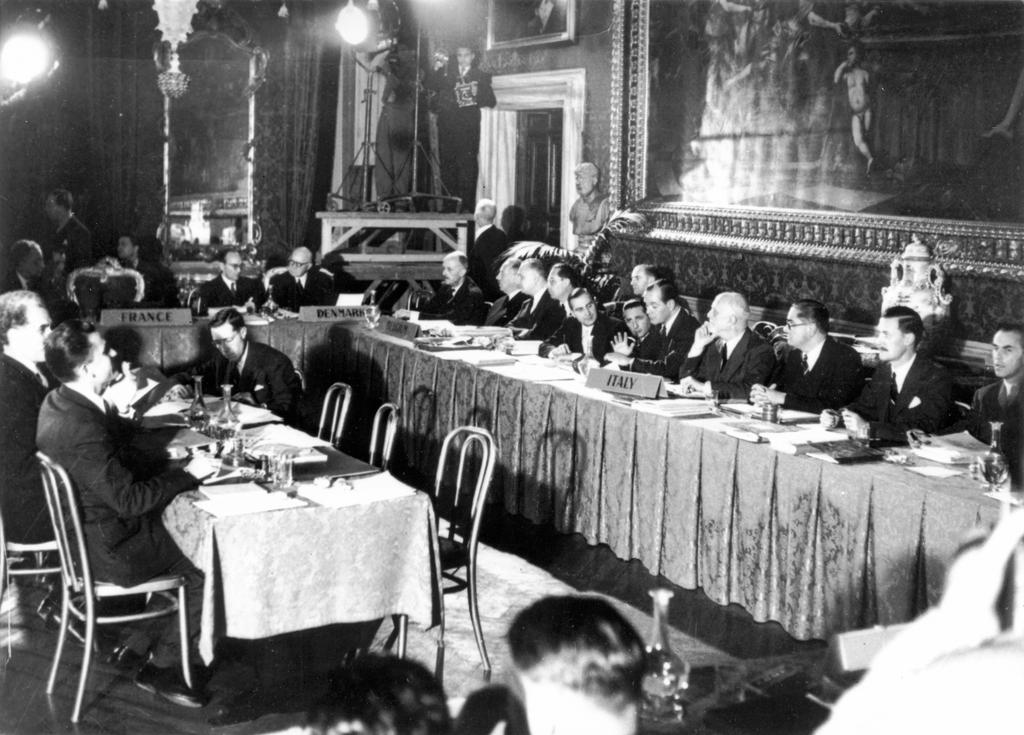

- The Convention for the Protection of Human Rights and Fundamental Freedoms, better known as the European Convention on Human Rights (ECHR), is signed on 4 November 1950. It entered into force on 3 September 1953.

- Packar, Vance (1957), The Hidden Persuaders, Pocket Books. The book was later on a list of David Bowie’s favourite books.
- Rider, Priscilla L. (1959), ‘Legal Protection of the Manifestations of Individual Personality – The Indentity-Indicia‘, Southern California Law Review 33(1), 31-70.
- Williams, Julian K. (1959), ‘Electric Data Processing in Federal Tax Administration’, Tax Executive, 11(2), 170-181.
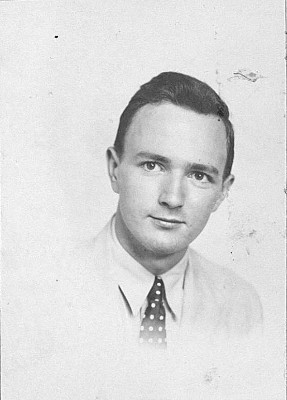
- On 19 May 1960, William F. Rickenbacker refused to answer a compulsory US census question. He was eventually imposed a suspended sentence of 60 days’ imprisonment, fined 100 $, and placed on probation for 1 day.
- Lewis, Anthony, ‘Tangled Issue of Wiretapping; It has defenders who consider it an essential tool of law enforcement, and critics who believe it an improper — possibly illegal — invasion of privacy‘, The New York Times, 21 August 1960.
- Prosser, William L. (1960), ‘Privacy‘, California Law Review 48(3), 383-423.
- ‘Rickenbacker’s Son Guilty of Defiance Over Census Data‘, The New York Times, 26 April 1962.
- Bloustein, Edward J. (1964), ‘Privacy as an Aspect of Human Dignity: An Answer to Dean Prosser‘, New York University Law Review 39(6), 962-1007.
- Brenton, Myron (1964), The Privacy Invaders, Coward-McCann.
- Michael, Donald N. (1964), ‘Speculations on the Relation of the Computer to Individual Freedom and the Right to Privacy‘, George Washington Law Review 33(1), 270-286.
- Packard, Vance (1964), The Naked Society, David McKay Company.
- ‘Bar Unit Studies Privacy Threat: Eavesdropping Devices and Truth Tests Assayed‘, The New York Times, 17 February 1964.
 Gloria González Fuster